Bojana Ginn: Working Artist Project Exhibition
In 2017, Bojana Ginn was selected as a recipient of the Museum of Contemporary Art of Georgia’s prestigious Working Artist Project Fellowship, a year-long award supporting established Atlanta artists through a major stipend, studio assistance, publication, and a solo exhibition of newly developed work. Created to foster ambitious artistic production and strengthen Atlanta’s contemporary art community, the fellowship has become one of the region’s most significant recognition for mid-career artists.
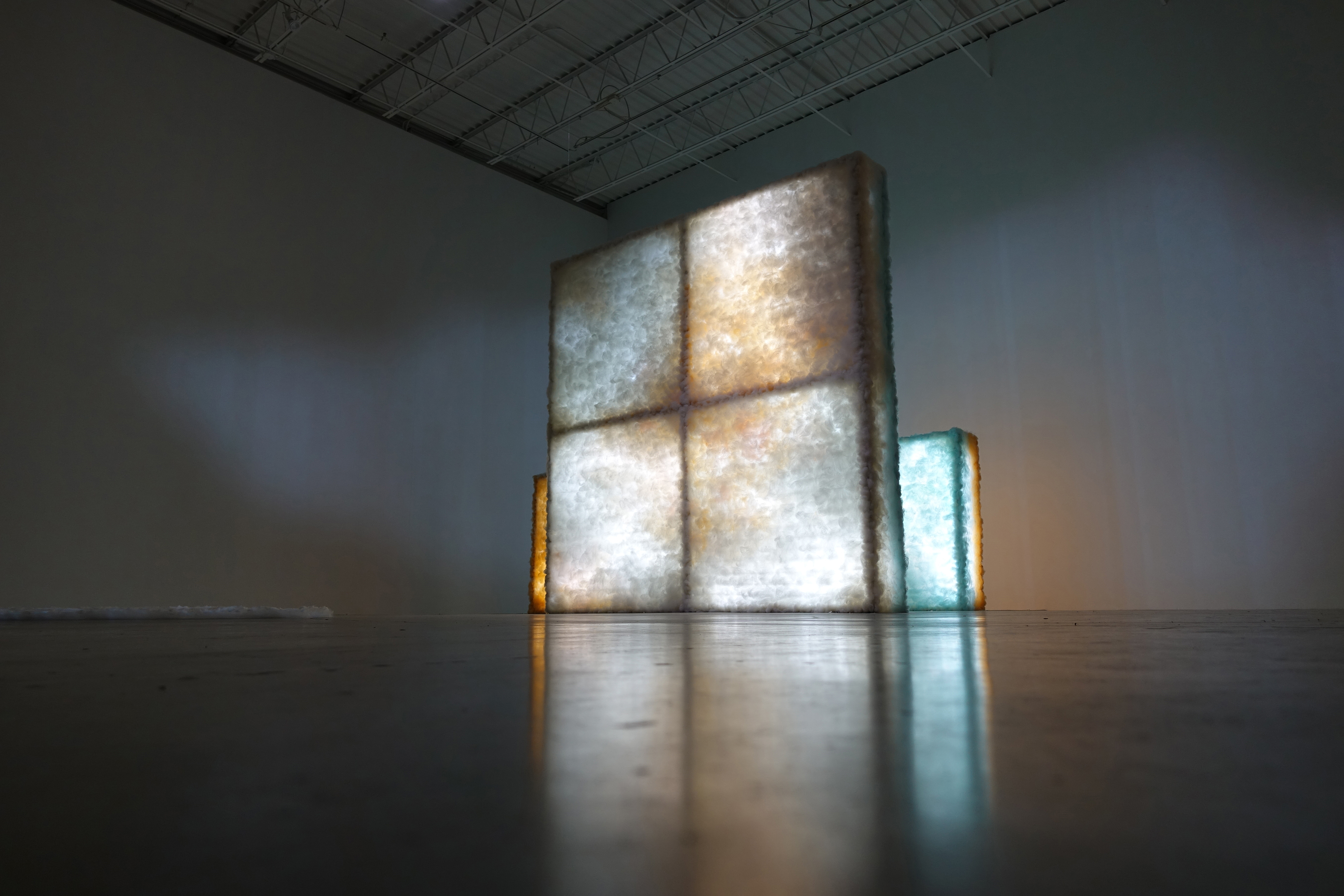
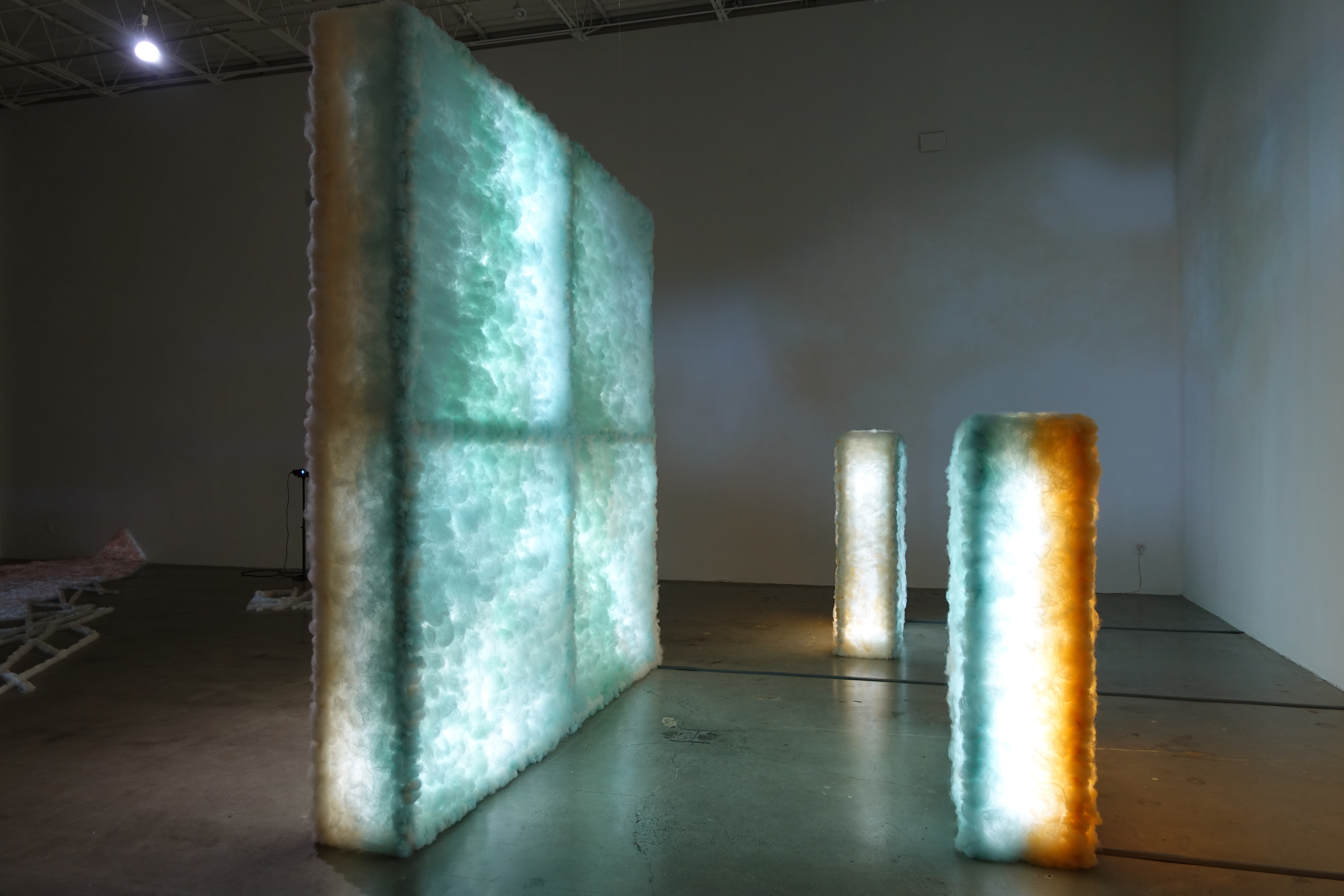
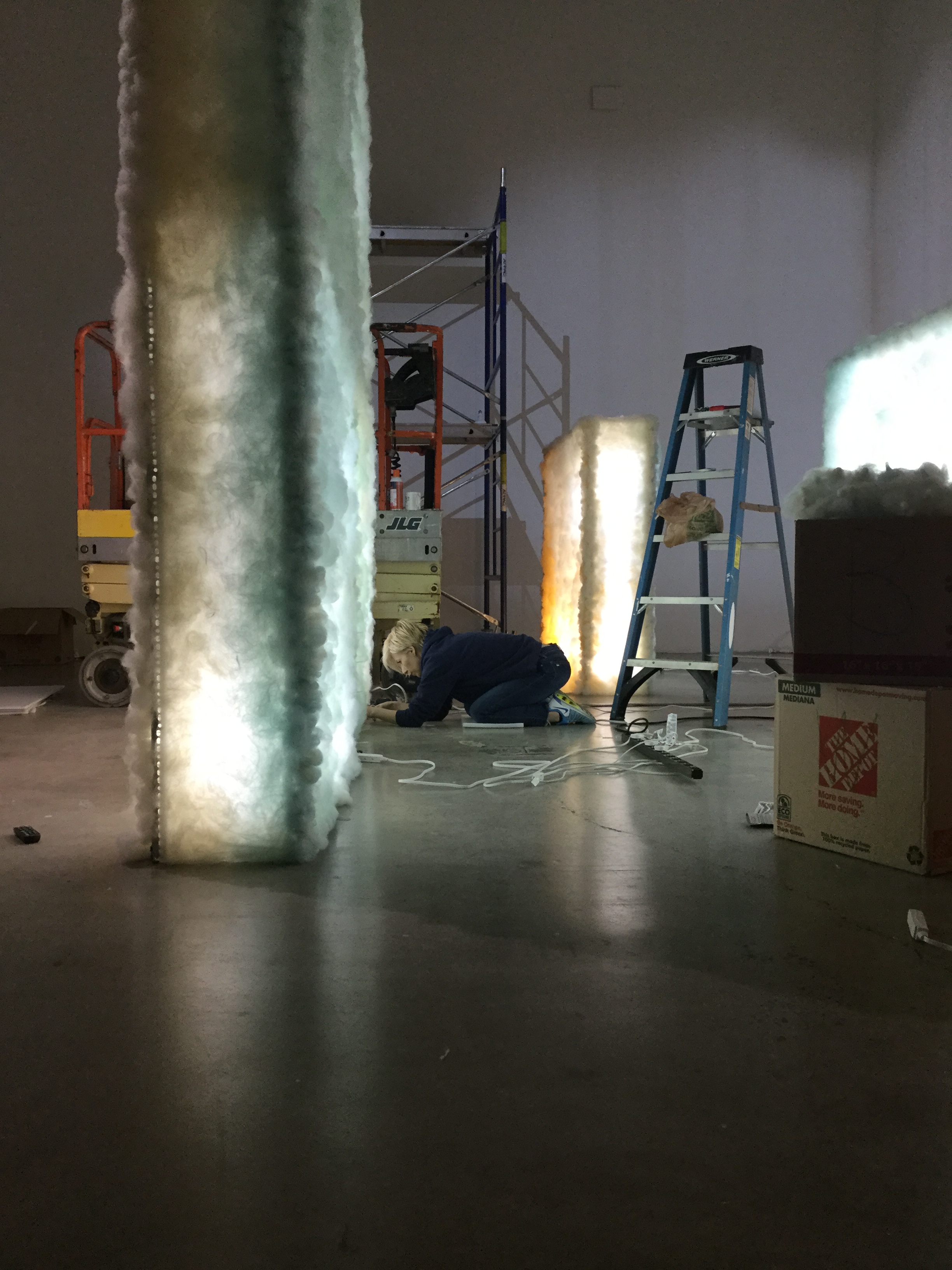
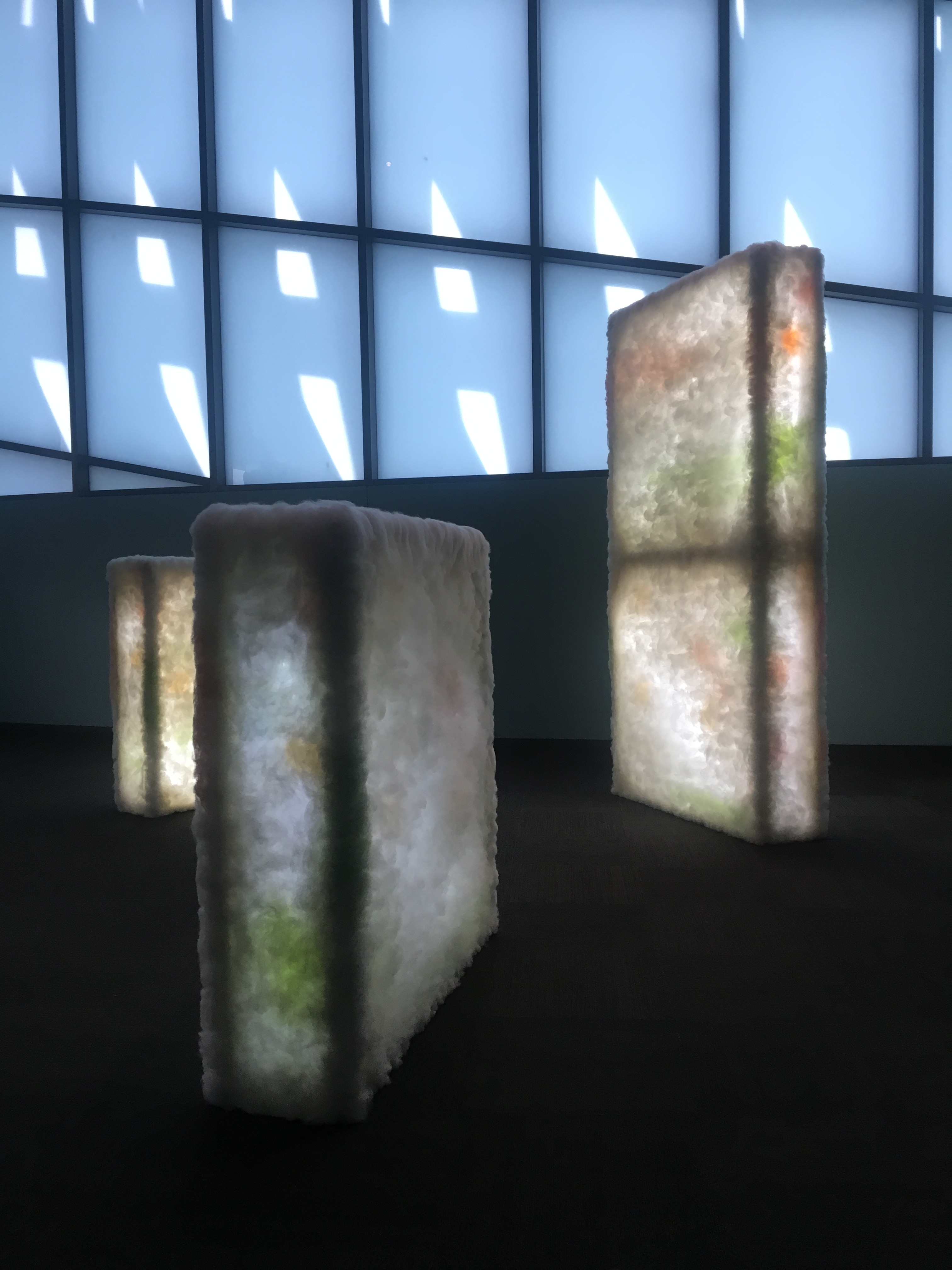
For her resulting 2018 exhibition at MOCA GA, Ginn transformed the gallery into an immersive environment where organic matter and digital imagery converged. Monumental geometric forms constructed from stretched sheep’s wool occupied the space like translucent architectures. Influenced by Minimalist sculpture and informed by the artist’s background in medicine and science, these large-scale cubes and polygonal structures balanced mathematical precision with the softness and vulnerability of living material. Their surfaces appeared simultaneously architectural and bodily, evoking skin, membranes, cells, and shelters.
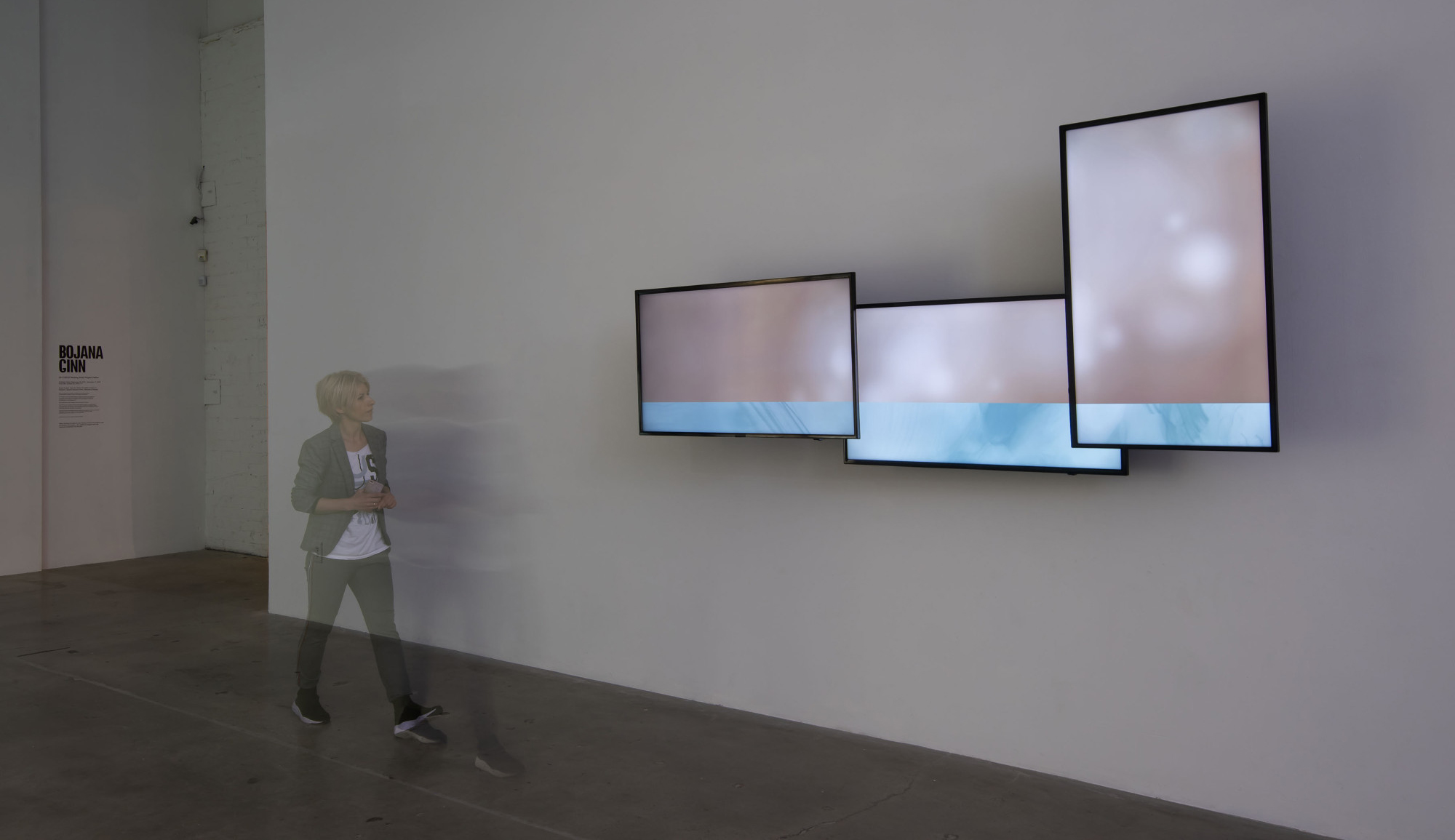
Extending across the floor, a field of raw wool became the site of a projected digital intervention. Complex mathematical structures unfolded across its surface, their intricate networks filled with streams of flowing pixels and luminous moving imagery. Here, fiber and pixel entered into dialogue: one rooted in the ancient history of the body and handcraft, the other emerging from the expanding realm of computation, biotechnology, and artificial intelligence.
Throughout the installation, Ginn explored the increasingly porous boundary between the biological and the technological. Wool fibers became metaphors for hair, skin, and cellular structures, while projected pixels suggested data, code, and synthetic life. Together they proposed a future in which digital systems no longer exist outside the body but become interwoven with it. Rather than framing this convergence as dystopian or utopian, the exhibition approached it with tenderness and curiosity, asking how humanity might retain its sense of wonder, intimacy, and embodiment within a rapidly evolving technological landscape.
The installation was enveloped in softly shifting fields of light. Healing blues and warm oranges animated the space, while slow-moving projections washed across walls and occasionally settled upon the bodies of viewers themselves. These intimate moments dissolved the distinction between observer and artwork, transforming visitors into temporary participants within the visual ecosystem. The gallery became a contemplative environment where light, color, fiber, and motion encouraged a heightened awareness of presence.
Viewed today, the exhibition foreshadows many of the concerns that continue to define Ginn’s practice. The merging of organic materials with digital systems, the translation of scientific concepts into sensory experience, and the exploration of technology through the language of beauty and care would later evolve into her ongoing investigations of the Biometric Sublime. In this early immersive environment, Ginn proposed a vision of the future that was neither mechanical nor purely biological, but profoundly hybrid: a place where pixels and fibers, algorithms and bodies, coexist within a shared ecology of perception.