Knots as Processes in Art and Mathematics
Bojana Ginn
MFA Candidate 2012, Savannah College of Art and Design
1280 Peachtree Street (Art Center Way and 15th St.) • Atlanta, GA, 30309 • USA
bginn@mindspring.com
Abstract
Analysis of reality in both math and art follow certain processes and methods. In this paper, I will show the
correlation between the exploration of knotted structures in my art with the research of mathematicians
Radmila Sazdanovic from the University of Pensylvania, co-author of the book LinKnot – Knot Theory by
Computer, and the work of L.G. Meredith and David F. Snyder from Texas State University, Knots as
Processes: a New Kind of Invariant.
Introduction
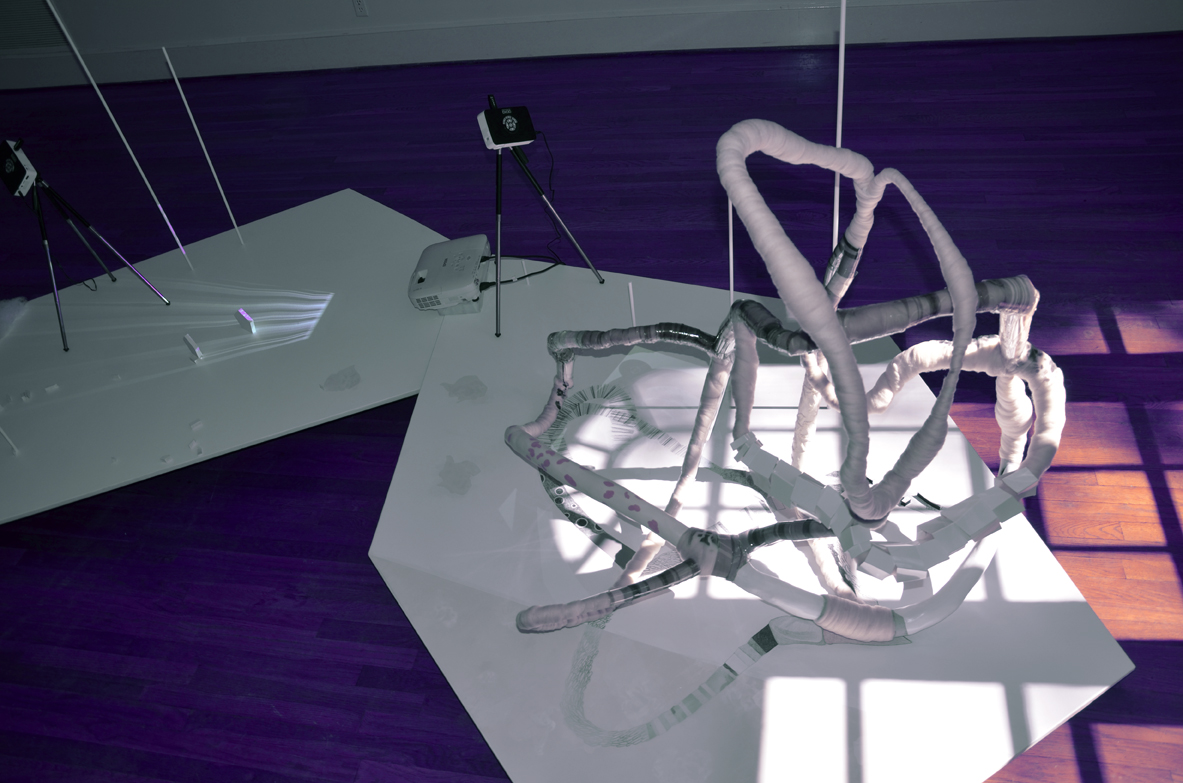
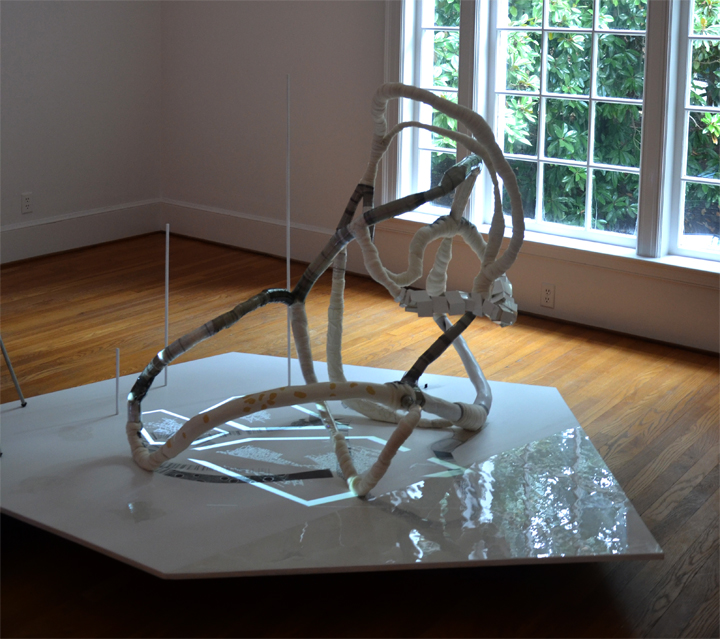
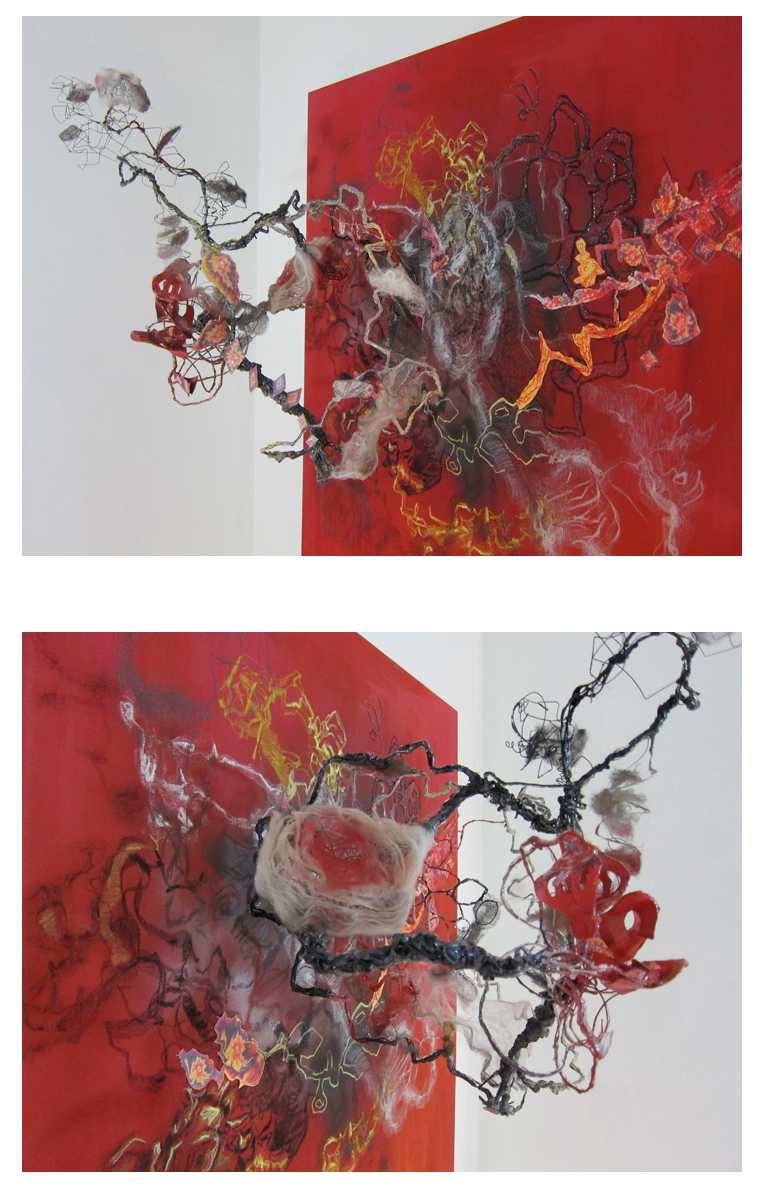
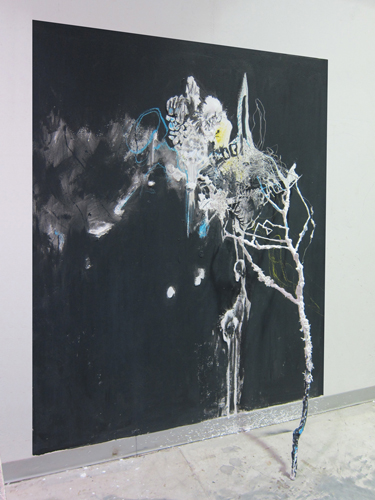
In order to understand the meaning of knotted structures in my art, it is important to analyze the
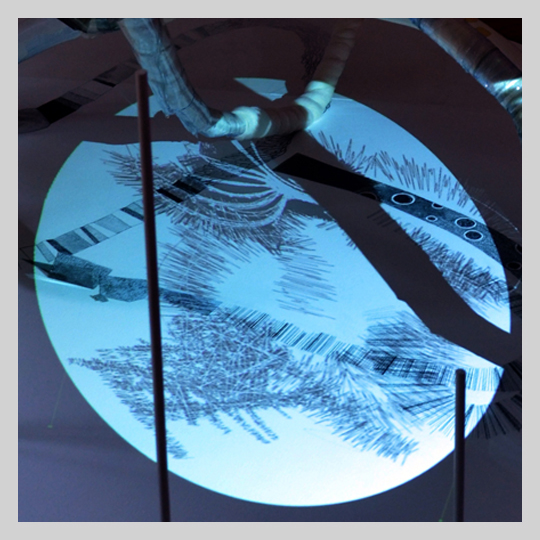
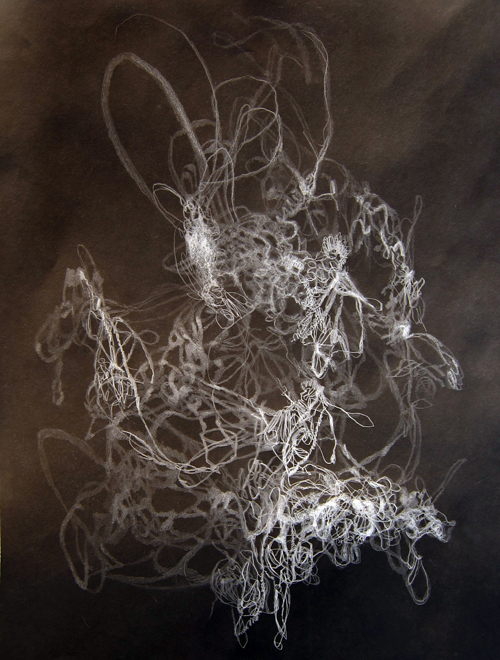
meaning of line in my work. I see line as a carrier of information. This understanding is
influenced by the experiences of line and line-looking objects in everyday life. Lines on roads
divide traffic into lanes, inform with their shape, and point as an arrow. Less than a decade ago,
telephone cables transported our voices. We still see power lines conveying electricity: simple
and black on the outside, alive and active in the inside. Our Internet lines (cables) are used to
transport letters, documents, photographs. In biology, our genetic information has a curly-line-
form placed inside of chromatids. In medical diagnostic technology, lines of EKG or EEG inform
us of the nature of pulsations in our hearts and brains. Lines in seismographs educate us about the
movements of the Earth. Examples are numerous. The forms of wavy line and knot-like structures
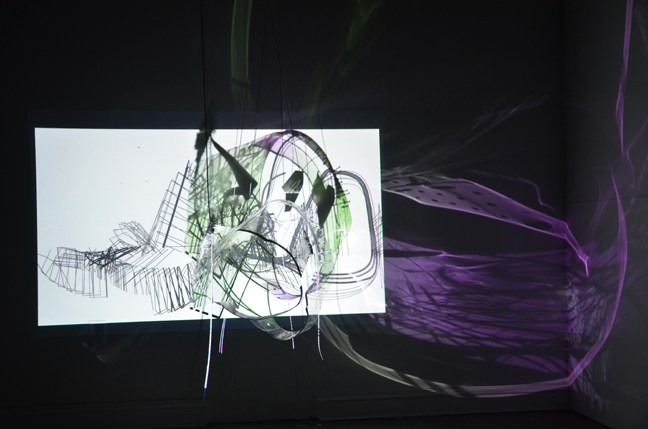
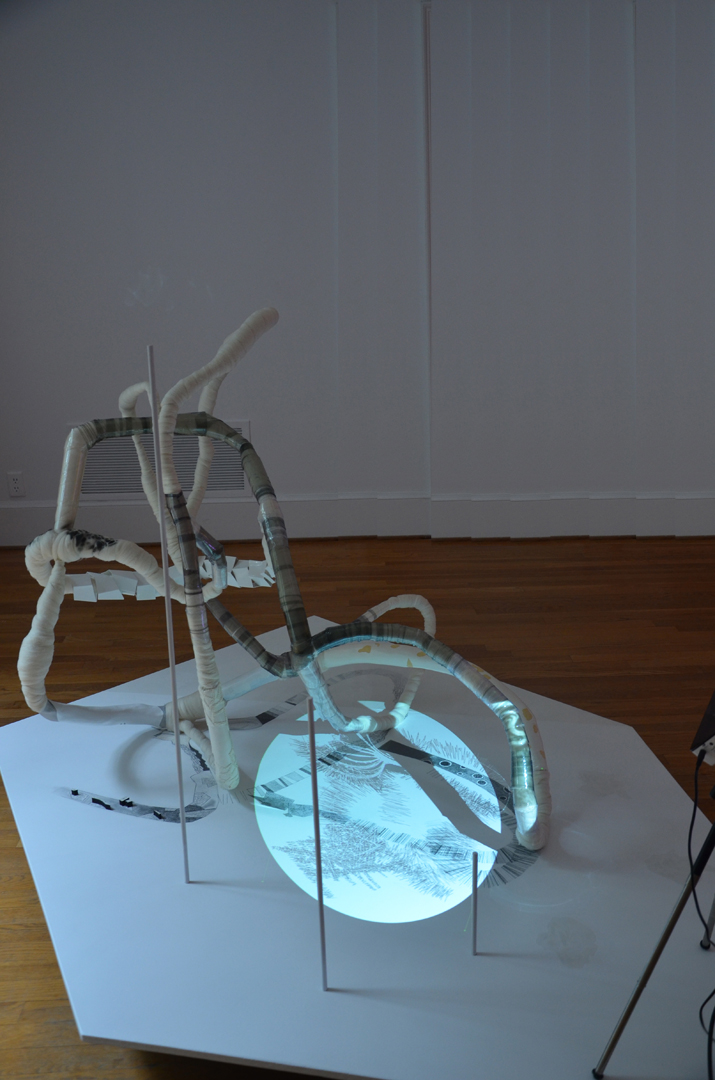
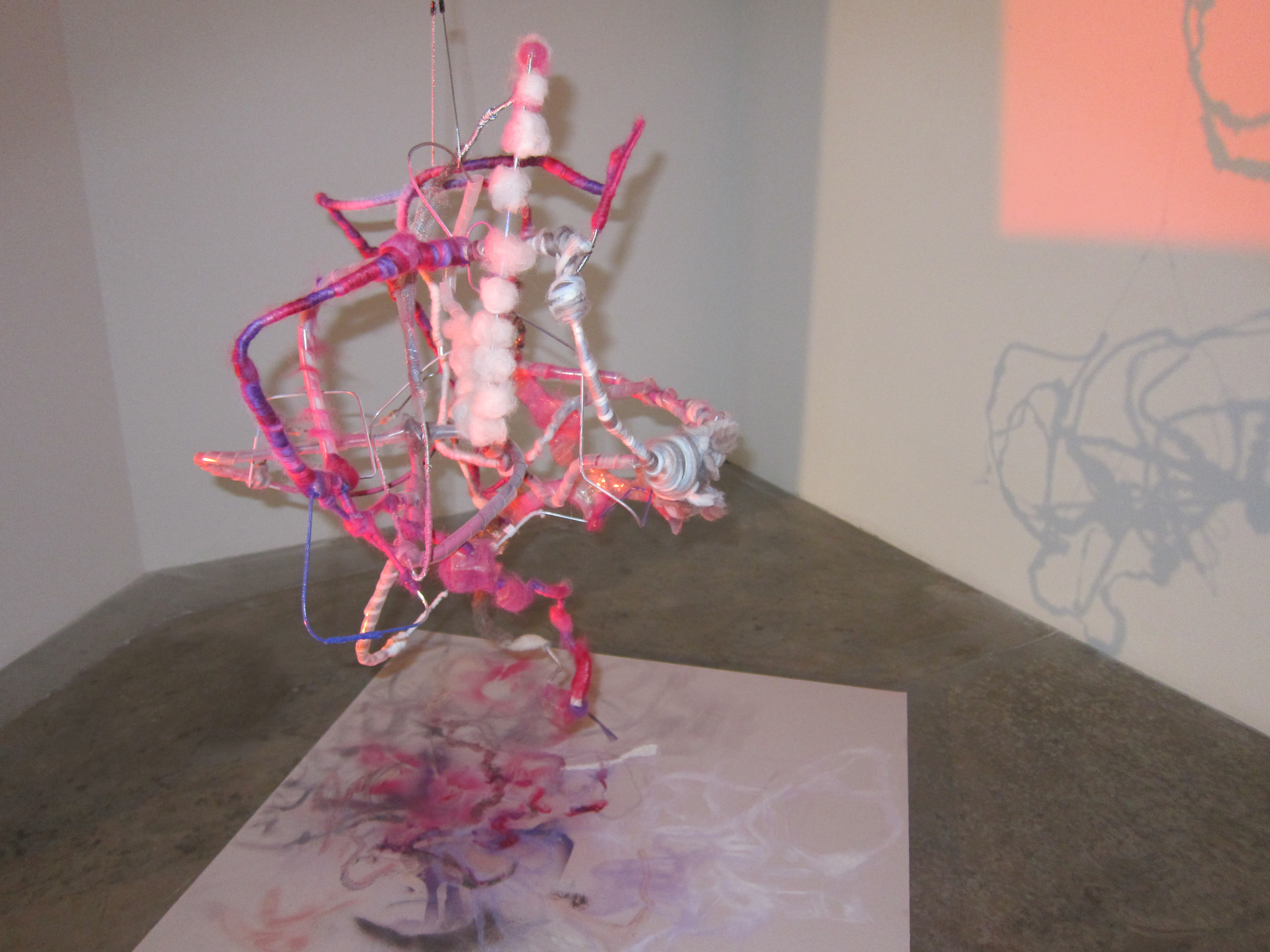
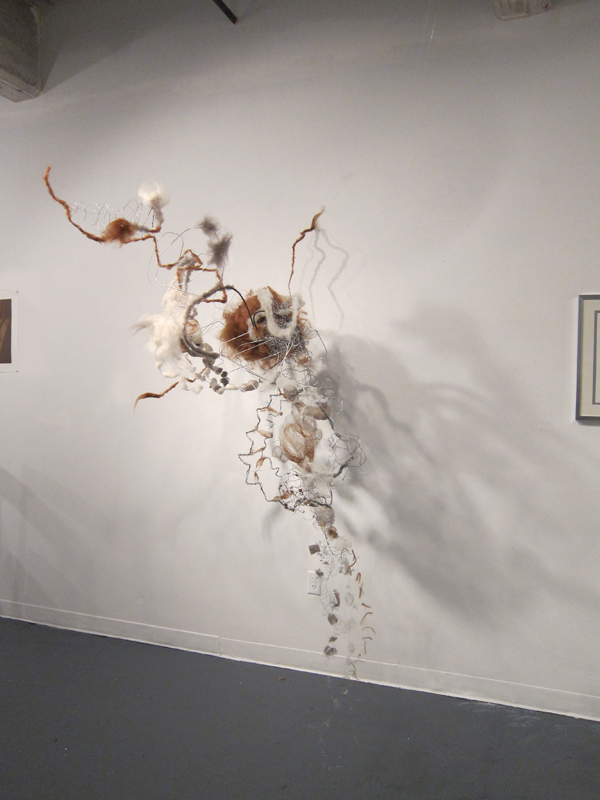
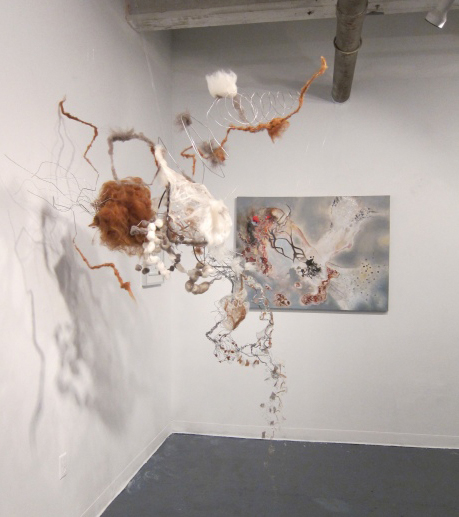
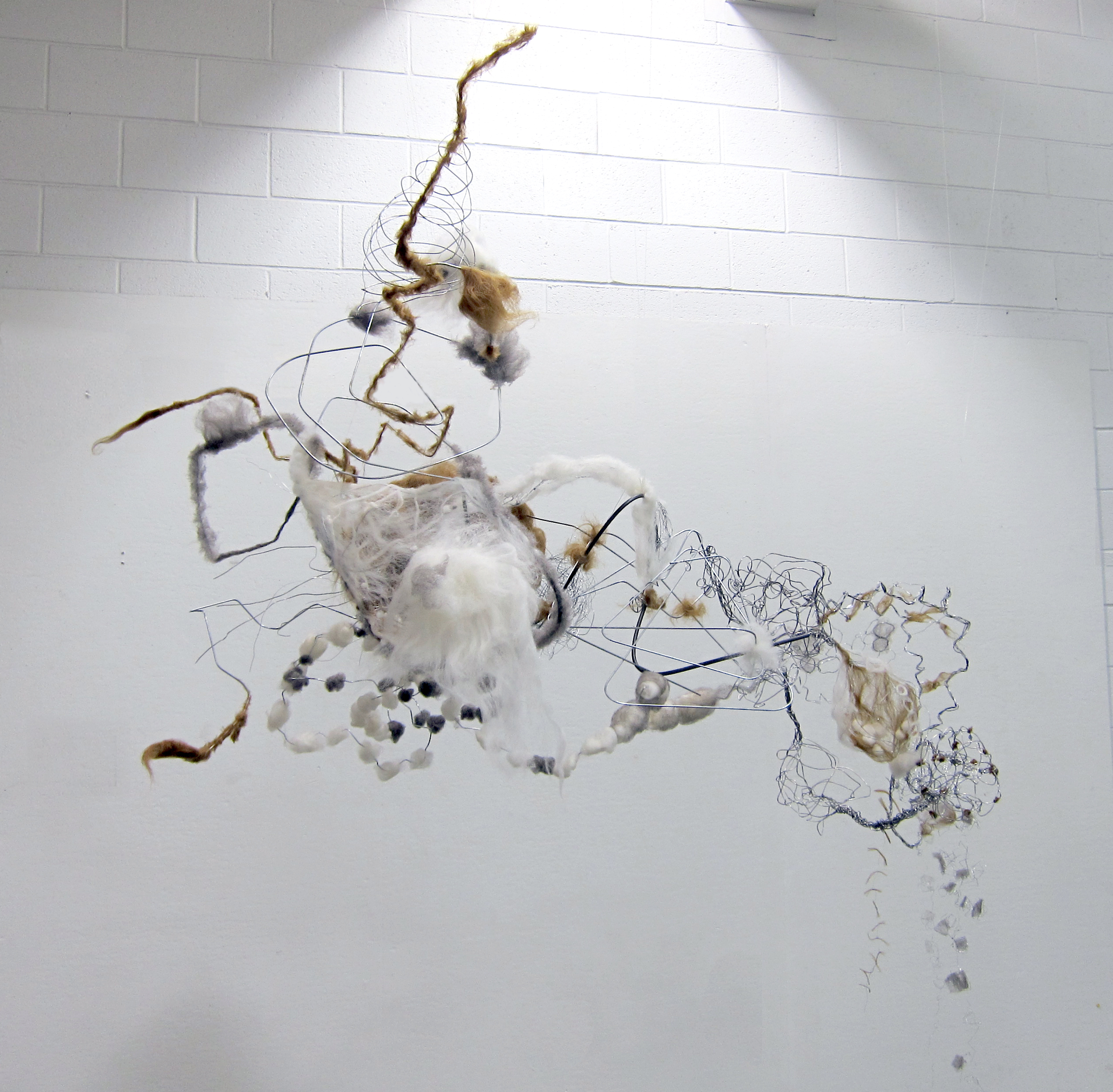
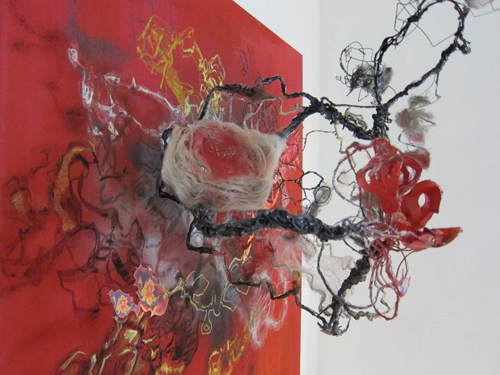
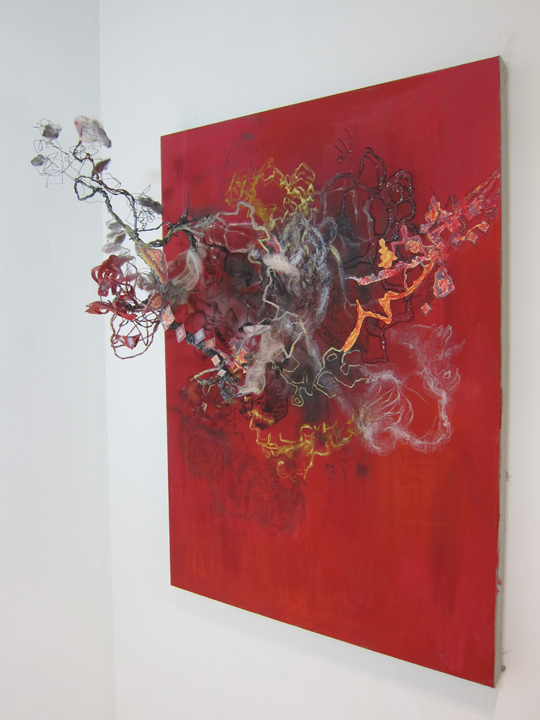
are at the base of my wire sculptures. If line is information, then knots are events: by bending,
breaking and manipulating line, we create a story, an event. To sculpt is to analyze, to ask what
happened, or what is happening; to discover/reveal the mechanism, to elevate the event to the
level of happening.
Full paper:
https://www.academia.edu/3119915/Knots_as_Processes_in_Art_and_Mathematics
https://archive.bridgesmathart.org/2012/bridges2012-369.pdf