
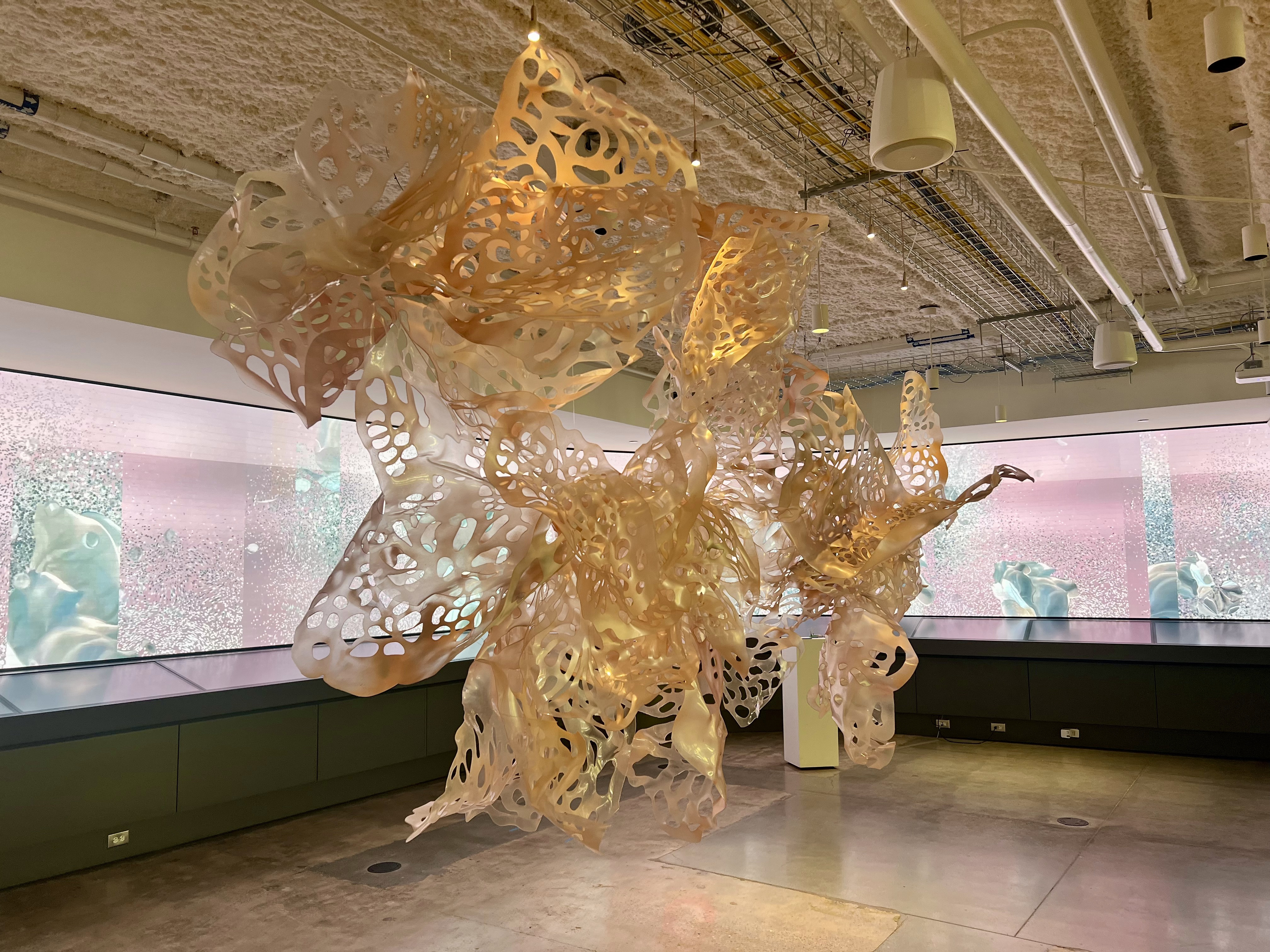
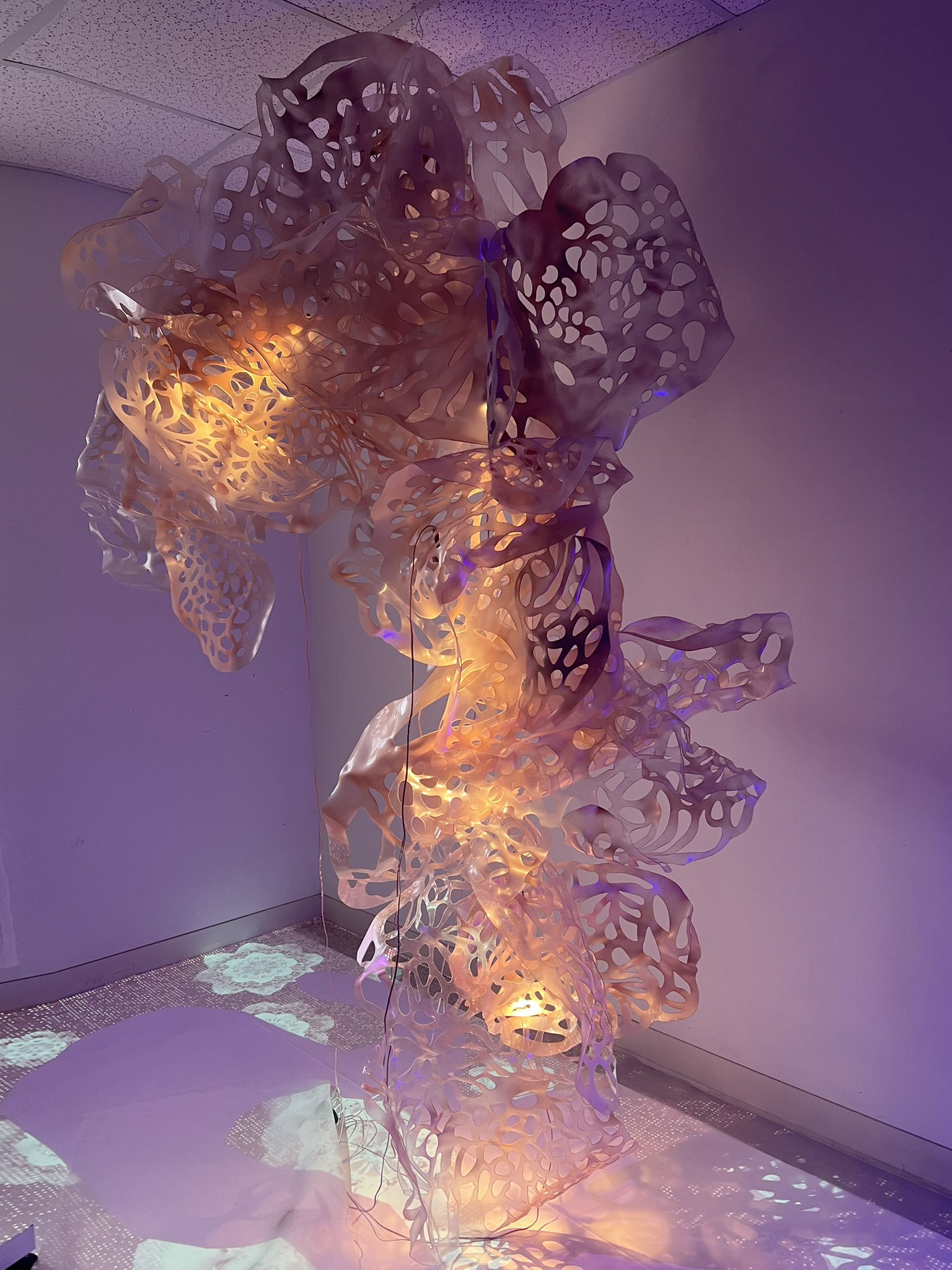
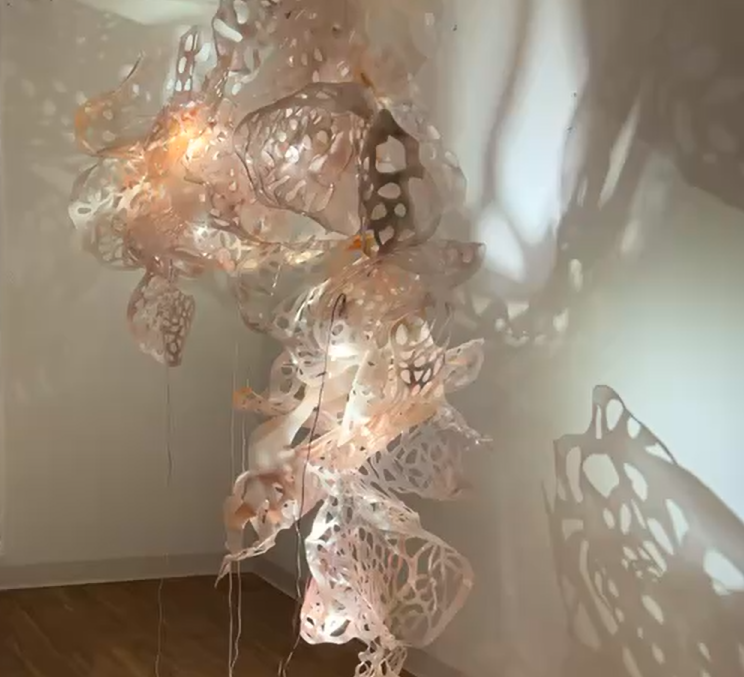
Orchid Dreams uses a trans-disciplinary approach, merging art, biotechnology, and AI to explore bio-digital ecosystems of healing. Emphasizing a “phygital” (physical + digital) experience, it proposes that art, medical research, and emerging technologies can bridge detachment and renewal. From AI-shaped forms to fungi dissolving plastic and biofeedback-driven art, the work highlights integrated ecosystems that foster human and environmental well-being.
The project draws on transdisciplinary research in cognitive neuroscience, color psychology, and psychophysiology to examine how visual stimuli, chromatic environments, and regulated breath patterns influence autonomic nervous system responses. It integrates biofeedback, biotechnological studies on mycelial plastic degradation, and parametric, AI-driven design to investigate how art and science can co-create restorative ecosystems.
What if technology could soothe rather than overwhelm? What if the digital and organic could merge into spaces of renewal, rather than detachment?
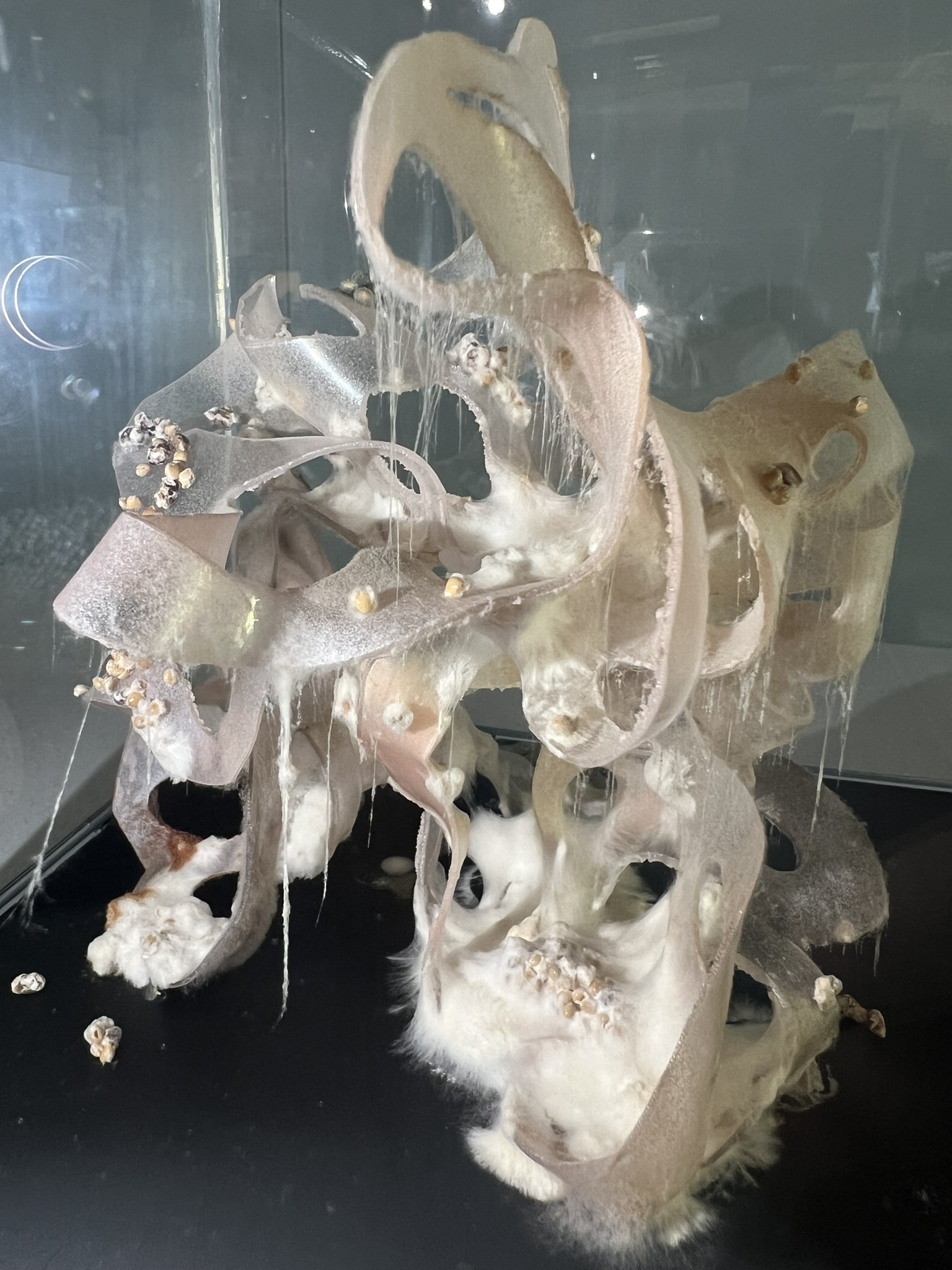
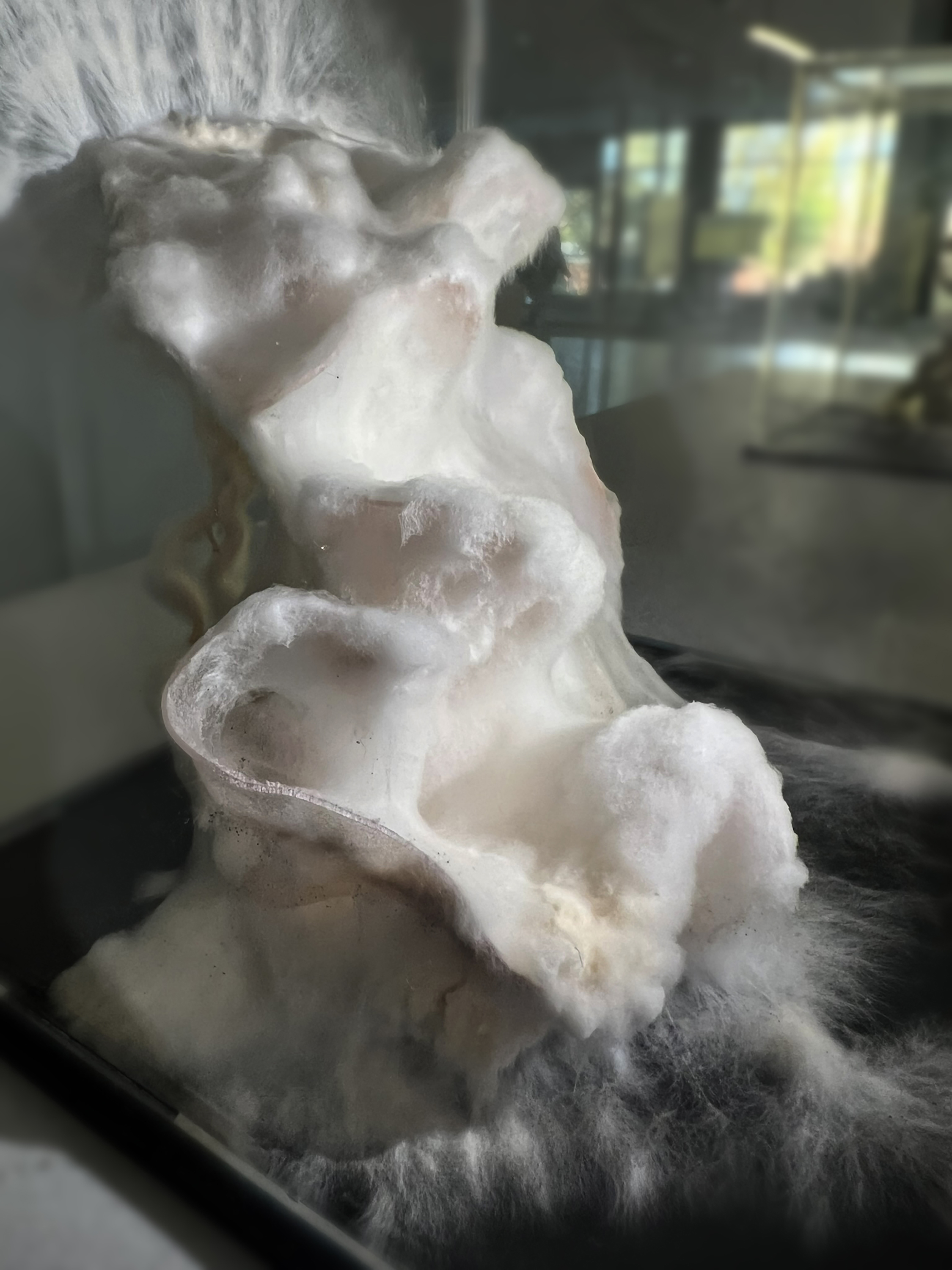
Mycelium Sculpture
Polyester resin sculpture inoculated with Pleurotus ostreatus, a species of fungi capable of metabolizing synthetic polymers.

 bojanaginn.com